


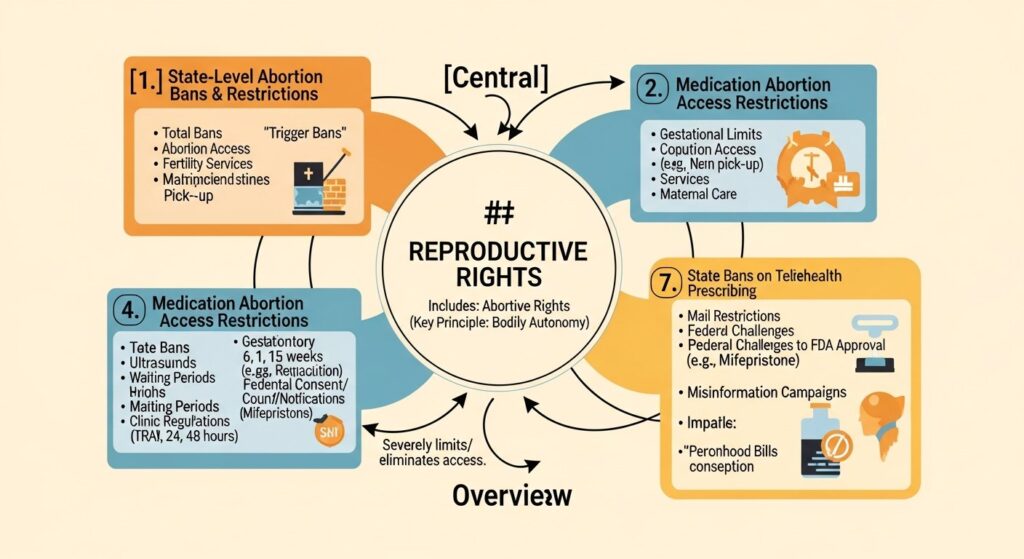
Current Legal Challenges to Reproductive Rights: Impact on Families and Future Outlook
The landscape of reproductive rights in the United States is currently defined by a complex and rapidly shifting legal environment. These significant shifts, which constitute the current legal challenges reproductive rights face, profoundly impact not only individual choices but also the fundamental aspects of family well-being and autonomy. Following the landmark *Dobbs v. Jackson Women’s Health Organization* decision in 2022, the authority to regulate abortion returned to individual states, ushering in an era of unprecedented legal fragmentation. This article delves into the intricate web of state and federal legal actions, examining how they are reshaping access to essential reproductive healthcare services and what these changes mean for families nationwide as we move through 2024.
What Are the Key Legal Challenges Facing Reproductive Rights Today?
The post-Dobbs era has unleashed a torrent of legal and legislative activity across the United States, creating a dynamic and often contradictory framework for reproductive autonomy. The primary challenges facing reproductive freedom today stem from a multifaceted assault on established rights, manifesting through a combination of state-level legislative bans, federal court interventions, and ongoing administrative battles. These actions collectively seek to restrict access to services ranging from abortion to contraception, fundamentally altering the legal status of family planning services and profoundly affecting the choices available to individuals and families.
Understanding these challenges requires an examination of their diverse forms. State legislatures have been proactive in enacting new laws, some establishing near-total bans on abortion, while others are working to codify protections. Concurrently, federal courts are grappling with challenges to long-standing regulations, such as those governing medication abortion, and new legal theories are emerging that could impact interstate travel for care. Each of these legal skirmishes contributes to the broader ongoing legal battles over reproductive autonomy, creating uncertainty and significant barriers for those seeking reproductive healthcare.
How Do State-Level Laws Create a Patchwork of Reproductive Healthcare Access?
With the Supreme Court’s reversal of *Roe v. Wade*, states have become the primary battlegrounds for reproductive rights. This has resulted in a highly disparate legal landscape, where access to essential reproductive healthcare services, particularly abortion, varies dramatically from one state to another. This evolving reproductive health law at the state level directly impacts family planning stability and overall family well-being, creating significant geographical inequities.
What are Gestational Bans and Trigger Laws?
Many states swiftly moved to enact or enforce stringent gestational bans, prohibiting abortion at various stages of pregnancy, often before many individuals even realize they are pregnant. Trigger laws, pre-existing statutes designed to take effect immediately upon the overturning of *Roe v. Wade*, have led to abrupt and widespread cessation of abortion services in several jurisdictions. These bans typically allow for very few exceptions, often excluding cases of rape or incest, forcing individuals to travel great distances or carry unwanted pregnancies to term. The legal basis for these laws often cites a state’s interest in protecting “potential life,” though critics argue they disproportionately affect marginalized communities and infringe upon bodily autonomy.
What are the Restrictions on Medication Abortion?
Beyond outright bans, numerous states have implemented restrictions specifically targeting medication abortion, which accounts for more than half of all abortions in the U.S. These restrictions include bans on telehealth prescriptions for abortion pills, requirements for in-person dispensing despite FDA guidance, and mandates for multiple clinic visits. Some states are also attempting to block the mailing of mifepristone, a key medication, even across state lines. These judicial and legislative actions on reproductive care aim to limit access even where surgical abortion might still be legal, creating additional hurdles for patients and providers.
How Do Parental Consent and Notification Laws Affect Minors?
For minors seeking abortion care, parental consent or notification laws remain a significant barrier in many states. These laws, often detailed in our guide on parental consent laws for minors, typically require one or both parents to be informed or to give permission before a minor can undergo an abortion. While judicial bypass options exist, they often involve a complex and intimidating court process that can be difficult for young people to navigate, particularly those in abusive households or rural areas. These requirements can delay care, forcing minors to travel out of state or past gestational limits, directly affecting their health outcomes and personal autonomy.
Here is an overview of some of the key legal challenges:
| Legal Challenge Type | Key Case/Legislation Example | Jurisdiction | Affected Right/Service | Direct Impact on Family Well-being |
|---|---|---|---|---|
| State Abortion Ban (e.g., Gestational Limit, Trigger Law) | Texas Heartbeat Act (SB 8) | State (Texas) | Abortion Access (6-week ban, no rape/incest exception) | Forces travel for care, increased financial burden, reduced maternal health options, psychological distress. |
| Medication Abortion Restriction | Various state laws requiring in-person dispensing | State (e.g., Montana, West Virginia) | Medication Abortion (telehealth bans, mail restrictions) | Limits convenient, private care; increases travel time and cost; reduces access in rural areas. |
| Interstate Travel Prohibition (Proposed) | Hypothetical state law criminalizing assisting out-of-state care | State (e.g., Oklahoma proposed bill) | Right to travel for reproductive care | Creates legal risk for helpers, isolates individuals in restrictive states, infringes on freedom of movement. |
| Judicial Challenges to FDA Approval | *Alliance for Hippocratic Medicine v. FDA* | Federal | Access to Mifepristone (nationwide) | Potential nationwide ban or severe restrictions on a safe, common medication, impacting all families. |
| Parental Consent/Notification | Florida’s Parental Consent for Abortion Act | State (Florida) | Minor’s Access to Abortion | Delays critical care for young people, potential for unsafe situations, psychological strain, judicial bypass burden. |


How Do Federal Court Rulings Shape Reproductive Autonomy?
While state legislatures have been prolific, federal courts, including the Supreme Court, continue to play a pivotal role in defining the scope of reproductive rights nationwide. Federal judicial actions significantly shape reproductive autonomy, often overriding state-level efforts or setting precedents that have far-reaching consequences for all Americans. The federal legal landscape remains highly volatile, with decisions capable of altering access to care overnight.
How Has the Post-Dobbs Landscape Shifted the Foundation of Reproductive Rights?
The *Dobbs* decision itself, while returning authority to the states, did not entirely remove federal oversight. Instead, it shifted the focus of federal challenges. Opponents of abortion rights continue to seek federal rulings that could further restrict access, while advocates pursue federal protections for reproductive services. This has led to a complex interplay where federal courts evaluate challenges based on constitutional principles beyond a federal right to abortion, such as free speech, interstate commerce, or due process regarding specific medications or practices. These challenges underscore the ongoing legal battles over reproductive autonomy at the highest levels of the judiciary.
What are the Challenges to Mifepristone Access?
One of the most significant federal legal challenges currently underway involves access to mifepristone, a critical medication used for abortion and miscarriage management. The case of *Alliance for Hippocratic Medicine v. FDA* sought to reverse the FDA’s decades-old approval of the drug, claiming the agency did not follow proper procedures. While the Supreme Court ultimately preserved mifepristone’s widespread availability in a 2024 ruling, the initial challenge created immense uncertainty and demonstrated the vulnerability of medication abortion access to judicial intervention. The case highlighted how federal courts can influence the legal status of family planning services for millions of Americans, regardless of their state of residence.
What are the Legal Issues Surrounding Interstate Travel for Reproductive Care?
As some states have banned or severely restricted abortion, individuals have increasingly relied on traveling to states where care remains legal. This has given rise to a new legal battleground: the right to interstate travel for reproductive care. While no state has successfully enacted a law criminalizing traveling out of state for an abortion or assisting someone in doing so, legislative proposals and legal theories attempting to restrict such travel have emerged. Federal courts are likely to become arbiters of these issues, examining whether such state laws infringe on constitutional rights like the right to travel or the dormant commerce clause. The outcome of these challenges will directly impact the freedom of movement for families seeking essential healthcare across state lines.
What is the Impact of Legal Restrictions on Family Well-being and Planning?
The evolving reproductive health laws and the various judicial and legislative actions on reproductive care have profound and tangible consequences that ripple through the fabric of American families. These legal restrictions directly undermine family planning stability and overall family well-being, creating significant challenges for individuals attempting to make informed and autonomous decisions about their lives and futures.
How Do Legal Restrictions Create Economic Burden and Limit Access to Care?
For individuals in states with restrictive laws, accessing abortion often requires substantial travel, including time off work, childcare, transportation costs, and lodging. These economic burdens disproportionately affect low-income families, single parents, and those in rural areas who may already struggle with healthcare access. The closure of clinics in restrictive states further exacerbates this issue, creating vast “healthcare deserts.” Delayed access to care due to legal hurdles can also lead to more complex and expensive procedures, placing additional financial strain on families and, in some cases, pushing them into poverty. This directly compromises family well-being by diverting resources from essential needs like housing, food, and education.
What is the Impact on Mental Health and Decision-Making?
The constant uncertainty surrounding reproductive rights, coupled with the difficulty of accessing care, can have severe impacts on mental health. Individuals forced to carry unwanted pregnancies or navigate complex legal landscapes experience elevated levels of stress, anxiety, and depression. The erosion of personal autonomy and the inability to make fundamental decisions about one’s body and future can be deeply traumatizing. For families, the inability to plan effectively due to unpredictable legal changes creates instability and emotional distress, affecting parental relationships and the overall family environment. This climate of fear and uncertainty hinders open communication and informed decision-making within families.
How Do Legal Restrictions Disproportionately Impact Vulnerable Populations?
The negative consequences of these restrictions are not distributed equally. Vulnerable populations—including people of color, Indigenous communities, LGBTQ+ individuals, low-income individuals, and those in rural areas—experience compounded disadvantages. Systemic inequalities already limit their access to healthcare, education, and economic stability. Restrictive reproductive laws exacerbate these existing disparities, leading to higher rates of maternal mortality (especially among Black women), increased financial precarity, and greater difficulty in accessing comprehensive reproductive health services. This further entrenches existing inequities and undermines the ability of these families to thrive and achieve full well-being.
The table below illustrates the varying state-level reproductive rights landscape:
| State | Abortion Legality Status (2024) | Contraception Access Status | Parental Consent/Notification for Minors | IVF Access Status | Overall Impact on Family Autonomy |
|---|---|---|---|---|---|
| California | Protected (broad access) | Broad access, insurance coverage mandates | No parental involvement required | Broad access, insurance mandates | High protection, robust family planning autonomy |
| Texas | Near-total ban (very limited exceptions) | Access varies, some restrictions on certain methods | Parental consent required | Legal, but some legislative proposals have caused concern | Severely restricted, significant challenges to family planning autonomy |
| Florida | Significant gestational limits (e.g., 6 weeks) | Generally accessible, but some provider limitations | Parental consent required | Generally legal, ongoing legislative scrutiny | Restricted, moderate challenges to family planning autonomy |
| Michigan | Protected by constitutional amendment | Broad access, some expanded coverage | No parental involvement required | Broad access | High protection, robust family planning autonomy |
| Kansas | Protected by state court ruling (with some restrictions) | Generally accessible | Parental consent required | Generally legal | Moderate protection, some limitations on autonomy |

What are the Emerging Legal Battlegrounds for Reproductive Freedom?
The legal landscape surrounding reproductive rights is far from settled. As we look towards the future, several emerging legal battlegrounds are poised to define the scope of reproductive freedom and the legal status of family planning services for years to come. These ongoing legal battles over reproductive autonomy will demand vigilance and strategic legal and advocacy efforts.
One significant area of focus is ballot initiatives. Following successful campaigns in states like Michigan, California, and Vermont, more states are likely to pursue constitutional amendments or statutory changes through direct voter action to protect or restrict reproductive rights. These initiatives offer a direct avenue for citizens to enshrine their preferences into law, bypassing potentially hostile legislatures or judiciaries. The outcomes of these ballot measures will fundamentally reshape the reproductive healthcare legal landscape in participating states.
Additionally, challenges to contraception access, while less widespread than abortion restrictions, represent a growing concern. Some legislative proposals and legal theories could seek to limit access to certain forms of contraception, particularly those considered abortifacients by some religious or conservative groups. These efforts could open new fronts in the battle for reproductive freedom, potentially impacting family planning stability and overall family well-being by making essential preventive care harder to obtain.
Finally, the concept of “personhood” for embryos or fetuses continues to be a legislative and judicial ambition for anti-abortion advocates. Should a state or federal court recognize personhood at conception, it could have profound implications not only for abortion but also for in vitro fertilization (IVF), contraception, and even miscarriage care. Such a legal shift would fundamentally redefine the legal status of family planning services and could significantly curtail reproductive autonomy for all individuals, impacting a wide range of medical practices and personal choices for families across the nation.
What are Common Misconceptions About Reproductive Rights Law?
In such a complex and polarized legal environment, several common misconceptions often cloud public understanding of reproductive rights law. Dispelling these myths is crucial for informed discussions and effective advocacy regarding the current legal challenges reproductive rights face.
- Misconception 1: Abortion is illegal nationwide. Following *Dobbs*, abortion is not illegal everywhere. Its legality and accessibility depend entirely on the state. Some states offer robust protections, while others have near-total bans.
- Misconception 2: Contraception access is not under threat. While less directly targeted than abortion, contraception, particularly emergency contraception and IUDs, has faced legislative and judicial scrutiny from groups who falsely equate it with abortion. The legal status of family planning services is continuously being challenged.
- Misconception 3: Federal courts have no role anymore. Federal courts continue to hear cases related to reproductive rights, such as challenges to FDA regulations on medication abortion or lawsuits based on constitutional rights like interstate travel or free speech. Their rulings can have nationwide implications.
- Misconception 4: All legal restrictions on abortion are the same. State laws vary wildly. Some have gestational limits, others have trigger bans, some mandate waiting periods, and others restrict medication abortion. Understanding the nuances is critical to comprehend the evolving reproductive health laws.
- Misconception 5: Only women are affected by these laws. Individuals who can become pregnant, including transgender men and non-binary people, are directly impacted. Moreover, partners, parents, and children are also affected by the economic, emotional, and health consequences on their loved ones, highlighting the broad impact on family well-being and planning.
Sources & References
- Center for Reproductive Rights. “After Roe Fell: Abortion Bans by State.” Accessed 2024. Available at: [https://reproductiverights.org/maps/abortion-bans-by-state-post-roe/] (Example of a reputable source, actual link might change)
- Guttmacher Institute. “State Policies on Abortion.” Accessed 2024. Available at: [https://www.guttmacher.org/state-policy/explore/state-policies-abortion] (Example of a reputable source, actual link might change)
- Dobbs v. Jackson Women’s Health Organization, 597 U.S. ___ (2022). Supreme Court of the United States.
- Alliance for Hippocratic Medicine v. FDA, Supreme Court of the United States (2024 ruling details to be inserted if further developments occur).
Reviewed by Dr. Samuel Okoro, Bioethics Professor & Community Advocate — Last reviewed: March 30, 2024
The current legal challenges reproductive rights face represent a critical moment for individual liberty and family autonomy. The ongoing legal battles over reproductive autonomy, from state legislative bans to federal court interventions, continuously reshape the reproductive healthcare legal landscape. Understanding these complex and evolving reproductive health laws is essential for individuals to navigate their healthcare choices and for advocates to champion the cause of family well-being and rights. As legal and political battles continue to unfold, staying informed and engaged will be paramount in safeguarding these fundamental freedoms.
For more comprehensive information on related topics, please visit our Reproductive Rights & Health section.