


Apply Family Mental Health First Aid Now: Empowering Families with Mental Health First Aid Skills
In the intricate tapestry of family life, ensuring the well-being of every member is paramount. Just as we learn physical first aid to respond to bodily injuries, understanding how to provide immediate support for emotional and mental health challenges is becoming increasingly vital. This proactive approach, empowering families through family mental health first aid, equips individuals with the skills to recognize, understand, and respond to signs of mental health distress or crisis within their household. It champions early intervention, reduces prevalent stigmas, and facilitates timely connections to professional support, all of which are integral to upholding the foundational concept of Family Well-being and Rights.
What is Mental Health First Aid?
Mental Health First Aid (MHFA) is an evidence-based training program that teaches participants how to identify, understand, and respond to signs of mental illnesses and substance use disorders. It helps individuals guide a person in crisis toward appropriate professional help and support.
What is Family Mental Health First Aid and Why Does it Matter?
Family mental health first aid is a specialized application of standard mental health first aid principles, tailored to the unique dynamics and relationships within a household. It’s not about diagnosing or treating mental health conditions, but rather about providing initial, non-judgmental support to a family member experiencing a mental health challenge or crisis. This invaluable skill set enables parents, siblings, children (age-appropriately), and other close relatives to become the first line of support, fostering an environment where mental health is openly discussed and proactively addressed.
The significance of this family-centric approach cannot be overstated. Mental health challenges often manifest first within the home, making family members ideally positioned for early recognition. Waiting for formal diagnosis or professional intervention can delay critical support, potentially exacerbating issues. By empowering families with first response skills, we drastically improve the chances for early intervention, which in turn leads to better outcomes, reduced severity of symptoms, and a quicker path to recovery for the individual. Moreover, it actively works to dismantle the stigma often associated with mental illness, promoting emotional literacy and resilience building across generations.


What are the Core Principles of Family Mental Well-being Support?
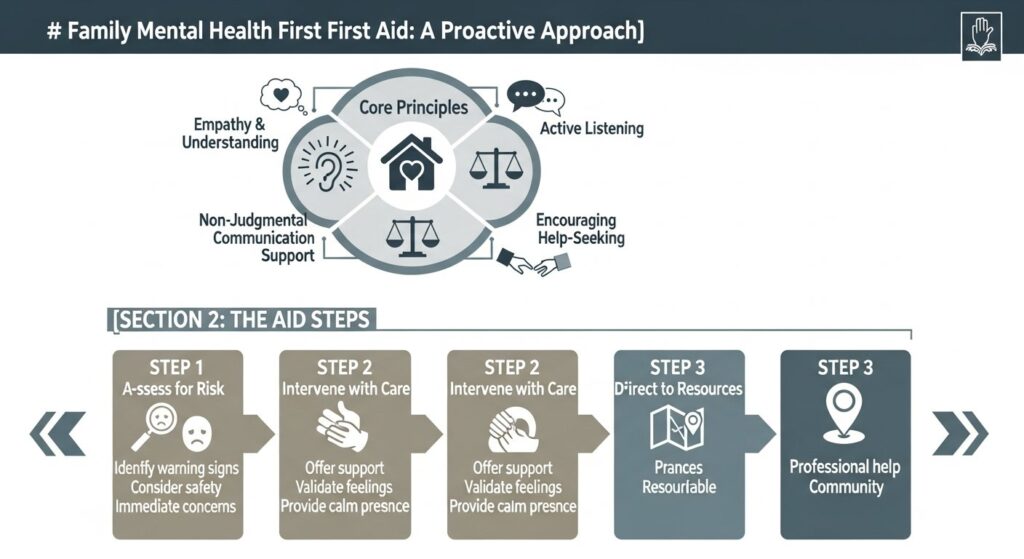
Effective mental health assistance within the family unit is built upon a foundation of key principles that prioritize empathy, safety, and informed action. These principles guide family members in providing compassionate and effective support, transforming potentially isolating experiences into opportunities for connection and healing.
- Non-judgmental Listening: Creating a safe space where a family member feels heard and understood without fear of criticism or dismissal is fundamental. This means actively listening to their concerns, feelings, and experiences without immediately offering solutions or opinions.
- Encouraging Professional Help: The primary goal is to bridge the gap between distress and professional care. Family members learn how to gently guide and support their loved one in seeking help from qualified mental health professionals, therapists, or counselors, rather than attempting to be the sole solution.
- Reducing Stigma: Mental health challenges often carry a heavy burden of shame and isolation due to societal stigma. Family mental well-being support actively works to normalize discussions about mental health, treating it with the same seriousness and care as physical health, thereby reducing internalized stigma.
- Promoting Self-Care for the First Aider: Supporting a family member through a mental health crisis can be emotionally taxing. This principle emphasizes the importance of the first aider’s own well-being, encouraging them to recognize their limits and seek support for themselves when needed.
- Ensuring Safety: In situations where there is a risk of harm to oneself or others, the immediate priority is to ensure safety. This involves knowing how to assess risk, remove means of harm, and access emergency services if necessary.
What is Stigma?
Stigma refers to negative attitudes or discrimination against someone based on a distinguishing characteristic such as a mental illness. It can lead to prejudice, fear, misunderstanding, and discrimination, often preventing individuals from seeking the help they need.
| Principle (Entity) | Description (Attribute) | Family Application Example (Value) |
|---|---|---|
| Non-judgmental Listening | Allowing the person to express feelings without interruption or criticism. | “I hear you saying you feel overwhelmed. Tell me more about what’s going on, and I’ll just listen.” |
| Encouraging Professional Help | Guiding the individual towards appropriate mental health services. | “It sounds like a professional therapist could offer some great tools for what you’re experiencing. I can help you find someone.” |
| Reducing Stigma | Normalizing conversations about mental health within the family. | “It’s okay not to be okay. We talk about physical health openly, and mental health is just as important.” |
| Promoting Self-Care | Recognizing and addressing the emotional toll on the first aider. | “After a difficult conversation, I might take a quiet walk or connect with my support system to recharge.” |
| Ensuring Safety | Assessing and mitigating risks of harm to self or others. | “If someone expresses thoughts of self-harm, I’d immediately remove dangerous items and call a crisis line or emergency services.” |
How Can Families Provide Mental Health Assistance? (Practical Steps)
Providing initial mental health assistance to a family member is a structured yet empathetic process. Adapted from the internationally recognized ALGEE action plan, these steps empower families to respond effectively to signs of distress or crisis.
-
How Can Families Recognize Signs of Distress in Family Members?
The first step involves being attuned to changes in a family member’s behavior, mood, or functioning that might signal a mental health challenge. These signs can be subtle or overt, varying greatly between individuals and age groups. Early recognition is key to preventing escalation.
- Persistent Sadness or Irritability: More than just a bad mood; a prolonged state that affects daily life.
- Social Withdrawal: Retreating from family activities, friends, or hobbies previously enjoyed.
- Significant Changes in Sleep or Appetite: Extreme insomnia or oversleeping, or dramatic shifts in eating patterns leading to weight gain or loss.
- Increased Substance Use: Using alcohol, drugs, or prescription medications more frequently or in larger amounts as a coping mechanism.
- Expressions of Hopelessness or Worthlessness: Verbal cues indicating a lack of future perspective or self-esteem.
- Sudden Performance Decline: In school, work, or other responsibilities.
- Unusual Behavior: Paranoia, agitation, extreme mood swings, or expressions of delusions.
-
How Can Families Offer Non-Judgmental Support and Active Listening?
Once signs are recognized, approach your family member with empathy and a willingness to listen without judgment. This involves:
- Initiating a Calm Conversation: Express concern in a gentle, non-confrontational manner, focusing on observed behaviors rather than assumptions about their feelings.
- Practicing Active Listening: Give your full attention, make eye contact, nod, and use verbal affirmations. Reflect back what you hear to ensure understanding (“So, if I’m understanding correctly, you’re feeling a lot of pressure from…”).
- Validating Feelings: Acknowledge their emotions without needing to agree with their perspective (“That sounds really difficult,” “It’s understandable you’d feel that way”).
- Avoiding Advice-Giving: Resist the urge to fix the problem immediately. Your role here is primarily supportive, not advisory.
-
How Can Families Ensure Safety and Prevent Harm?
This is a critical component, especially if there’s any indication of self-harm, suicidal ideation, or harm to others. Specific actions include:
- Assessing Risk: Directly ask if they are thinking about hurting themselves. “Are you thinking about suicide?” is not an inappropriate question; it’s a necessary one. Look for warning signs like preoccupation with death, giving away possessions, or expressing feelings of being a burden.
- Removing Means: If there’s a risk of self-harm, remove access to potential means (e.g., firearms, medications, sharp objects).
- Staying with Them: Do not leave someone alone if you believe they are at immediate risk.
- Seeking Immediate Professional Help: Call emergency services (e.g., 911 in the US), a crisis hotline, or take them to an emergency room if the risk is high.
-
How Can Families Connect Loved Ones to Professional Help and Resources?
Once immediate safety is established, the next crucial step is guiding the family member toward appropriate professional support. This might involve:
- Researching Options: Help identify therapists, psychiatrists, support groups, or inpatient facilities. Consider factors like insurance, location, and specialization.
- Offering Practical Support: Offer to make phone calls, schedule appointments, or even accompany them to an initial consultation.
- Educating on Benefits: Gently explain how professional help can provide strategies, coping mechanisms, and treatment plans.
- Respecting Autonomy (where appropriate): Encourage agency in choosing their support system, while still prioritizing their well-being.
-
Why is Self-Care Important for Family Mental Health First Aiders?
Providing emotional support to a family member can be emotionally draining. It’s essential for the first aider to prioritize their own mental and emotional health to avoid burnout and continue being an effective support system.
- Recognize Your Limits: Understand that you cannot “cure” someone’s mental health condition. Your role is supportive.
- Seek Your Own Support: Talk to a trusted friend, therapist, or support group about your experiences and feelings.
- Maintain Healthy Habits: Ensure adequate sleep, nutrition, exercise, and engage in activities you enjoy.
- Set Boundaries: It’s okay to take breaks and create healthy boundaries to protect your energy.

| Common Sign/Symptom (Entity) | Potential Concern (Attribute) | Family First Aid Response (Value) |
|---|---|---|
| Persistent Sadness/Irritability | Depression, anxiety, adjustment disorder | Initiate a calm, non-judgmental conversation; listen actively; validate feelings. |
| Social Withdrawal | Depression, social anxiety, early psychosis | Express concern, invite them to activities without pressure, suggest professional evaluation. |
| Significant Changes in Sleep/Appetite | Stress, depression, anxiety, eating disorder | Observe patterns, discuss gently, encourage healthy routines and professional input. |
| Increased Substance Use | Coping mechanism for underlying mental distress, substance use disorder | Express concern without judgment, focus on health impacts, suggest professional addiction support. |
| Expressing Hopelessness | Depression, suicidal ideation | Ask directly about self-harm, ensure safety, seek immediate crisis support (e.g., hotline, ER). |
What is the Impact of Proactive Mental Health Support on Family Well-being and Rights?
The widespread adoption of proactive mental health assistance for families creates a ripple effect, profoundly enhancing overall Family Well-being and Rights. When family members are equipped to respond to mental health challenges, the entire household benefits from a stronger, more resilient foundation.
Firstly, it reinforces the fundamental right of every individual to mental health and well-being. By fostering an environment where mental health is openly discussed and supported, families actively work against discrimination and neglect that often accompany mental illness. This proactive stance ensures that children grow up understanding the importance of mental health, reducing their likelihood of experiencing related issues later in life and empowering them to advocate for their own needs.
Secondly, effective implementation of these practices leads to increased family resilience. Families that can openly address and navigate mental health issues together build stronger coping mechanisms and communication channels. This collective strength allows them to weather life’s inevitable storms more effectively, preventing mental health crises from leading to family fragmentation or prolonged distress. It cultivates a sense of mutual responsibility and empathy, where members understand that supporting one another’s mental health is a shared duty.
Finally, this approach significantly reduces the societal and personal burden of untreated mental health conditions. Early intervention, facilitated by family members, can prevent acute crises, reduce the need for costly long-term care, and improve individuals’ ability to participate fully in family, school, work, and community life. It upholds the right to adequate care and support, ensuring that no family member is left to struggle alone.
What is Resilience?
Resilience is the process of adapting well in the face of adversity, trauma, tragedy, threats, or significant sources of stress. It involves ‘bouncing back’ from difficult experiences and growing from them.
How Can Families Overcome Challenges and Build Resilience in Mental Health Support?
While the benefits of family mental well-being support are clear, implementing it effectively can come with its own set of challenges. Families may encounter resistance, struggle with stigma, or face difficulties accessing appropriate professional resources. Building resilience within the family unit is key to navigating these obstacles.
One significant challenge is the pervasive stigma surrounding mental health. Even within families, there can be a reluctance to acknowledge or discuss mental illness, often due to fear, misunderstanding, or cultural norms. Overcoming this requires consistent efforts to educate, normalize conversations, and demonstrate unwavering support. Family leaders, such as parents or guardians, play a crucial role in modeling openness and empathy.
Another hurdle can be a lack of awareness or understanding about available mental health resources. Families may not know where to turn for professional help, or they might face barriers such as cost, insurance limitations, or long wait times for appointments. Building resilience in this context means proactively researching and compiling a list of local and national mental health resources, including crisis hotlines, affordable therapy options, and support groups, before a crisis arises.
Internal family dynamics can also pose challenges. Existing conflicts, communication breakdowns, or power imbalances can hinder effective mental health assistance. In such cases, family therapy or mediation may be beneficial to address underlying issues and create a more supportive environment. It’s also important for family members to manage their own emotional responses and avoid burnout when supporting a loved one.
Building family resilience involves several strategies:
- Open Communication: Foster an environment where all family members feel safe to share their thoughts and feelings without judgment.
- Strong Relationships: Nurture bonds through shared activities, quality time, and mutual respect.
- Problem-Solving Skills: Equip family members with tools to collaboratively address challenges and find solutions.
- Positive Outlook: Encourage optimism and the belief that challenges can be overcome, even during difficult times.
- Seeking External Support: Recognize when professional help for the family as a whole is needed to navigate complex issues.
What are Common Pitfalls in Offering Family Mental Health Assistance?
Even with the best intentions, families can sometimes inadvertently fall into traps that hinder effective mental health assistance. Recognizing these common pitfalls is the first step towards avoiding them and providing truly supportive care.
- Taking on Too Much: Family members, especially parents, often feel an overwhelming need to “fix” the problem themselves. This can lead to burnout, resentment, and a delay in seeking professional help. It’s crucial to understand that your role is support and connection to care, not sole treatment.
- Minimizing or Dismissing Feelings: Phrases like “It’s just a phase,” “Snap out of it,” or “Other people have it worse” invalidate the individual’s experience and can make them feel unheard and misunderstood, leading to further withdrawal.
- Jumping to Solutions or Advice: While well-intentioned, offering unsolicited advice or quick fixes can be counterproductive. The goal in initial assistance is to listen and understand, not to provide therapy. This can make the person feel like their feelings are not being acknowledged.
- Ignoring Warning Signs: Hoping that symptoms will just disappear on their own is a dangerous approach. Ignoring persistent changes in behavior or mood can delay crucial early intervention and allow problems to escalate.
- Blaming or Shaming: Attributing mental health challenges to character flaws, personal weakness, or past mistakes only exacerbates the individual’s distress and reinforces stigma. Mental health conditions are illnesses, not choices.
- Neglecting Self-Care: The emotional toll of supporting a loved one with mental health challenges can be immense. Neglecting one’s own well-being can lead to caregiver burnout, making it impossible to continue providing effective support.
- Violating Privacy or Confidentiality: Discussing a family member’s mental health struggles with others without their consent, even with close relatives, can erode trust and make them less likely to open up in the future.
- Lack of Follow-Through: Offering help to find resources but not following through with practical assistance (e.g., making calls, driving to appointments) can leave the individual feeling abandoned.
What Resources and Training are Available for Household Mental Health Intervention?
Empowering families to provide effective mental health assistance means ensuring access to comprehensive resources and training programs. These tools are designed to build confidence, knowledge, and practical skills for real-world application.
One of the most impactful resources is formal training in Mental Health First Aid. While general MHFA courses are widely available, some organizations offer specialized modules for youth or specific communities. These courses typically cover topics such as recognizing signs and symptoms, the ALGEE action plan, crisis de-escalation techniques, and connecting individuals to professional care. Participating in such training can significantly boost a family’s capacity to respond effectively.
Beyond formal training, numerous organizations provide valuable information, support networks, and helplines:
- Mental Health First Aid USA: Offers comprehensive training programs for adults, youth, and specific communities.
- National Alliance on Mental Illness (NAMI): Provides educational programs, support groups, and advocacy for individuals and families affected by mental illness.
- Substance Abuse and Mental Health Services Administration (SAMHSA) National Helpline: A confidential 24/7 information service for individuals and family members facing mental and/or substance use disorders.
- The Trevor Project: Offers crisis intervention and suicide prevention services for LGBTQ young people.
- Crisis Text Line: Provides free, 24/7 crisis support via text message.
- Local Community Mental Health Centers: Often offer affordable services, support groups, and referrals to local resources.
It is highly recommended that at least one family member, if not more, consider undertaking formal training in mental health first aid. This not only equips them with certified skills but also demonstrates a commitment to prioritizing mental well-being within the household. Many organizations offer both in-person and virtual training options, making it more accessible for diverse family structures and schedules.
Conclusion: How Can Families Foster a Mentally Healthy Environment?
The journey towards a truly protective and nurturing family environment is holistic, encompassing physical safety, emotional security, and, critically, mental well-being. By embracing the principles and practices of family mental health first aid, families are not merely reacting to crises but are proactively building a foundation of empathy, understanding, and resilience. This commitment empowers every family member to recognize signs of distress, offer non-judgmental support, ensure safety, and effectively connect loved ones to professional help.
The benefits extend far beyond immediate crisis response, contributing to stronger family bonds, reduced stigma, and improved communication that permeates all aspects of family life. It reinforces the fundamental right of every individual within the family to mental well-being and ensures that help is accessible and readily available from those who know and care the most. By investing in these vital skills, families uphold their collective responsibility to protect and nurture one another, fostering a mentally healthy environment that supports growth, healing, and lasting well-being for all. This deep-dive into proactive mental health support is a crucial component of ensuring comprehensive Family Health & Safety.
Sources & References
- Mental Health First Aid USA. (2026). What is Mental Health First Aid? Retrieved from [https://www.mentalhealthfirstaid.org/](https://www.mentalhealthfirstaid.org/)
- National Alliance on Mental Illness (NAMI). (2026). Family & Friends. Retrieved from [https://www.nami.org/Support-Education/Family-Members-and-Caregivers](https://www.nami.org/Support-Education/Family-Members-and-Caregivers)
- Substance Abuse and Mental Health Services Administration (SAMHSA). (2026). National Helpline. Retrieved from [https://www.samhsa.gov/find-help/national-helpline](https://www.samhsa.gov/find-help/national-helpline)
- World Health Organization (WHO). (2026). Mental health: a state of well-being. Retrieved from [https://www.who.int/news-room/fact-sheets/detail/mental-health-strengthening-our-response](https://www.who.int/news-room/fact-sheets/detail/mental-health-strengthening-our-response)
- Jorm, A. F. (2012). Mental health literacy: Empowering the public to improve their own mental health. Australian Psychologist, 47(2), 85-94.
About the Author
Maya Rodriguez, Esq., Family Law & Reproductive Rights Attorney — Maya provides legal counsel and advocacy for families navigating complex issues from adoption to reproductive healthcare access, ensuring the rights and well-being of all family members are upheld.
Reviewed by Dr. Samuel Okoro, Bioethics Professor & Community Advocate — Last reviewed: March 30, 2026
Fact-Checked By Dr. Samuel Okoro
Reviewed by Dr. Samuel Okoro, Bioethics Professor & Community Advocate — Last reviewed: March 30, 2026